
Dry Ice Effects on CO2 Ingress
Dry ice, the solid form of carbon dioxide (CO2), is used in shipping for maintaining low temperatures, such as ≤ -60℃ or ≤ -65℃, due to its sublimation property. As dry ice transitions directly from solid to gas, it releases significant volumes of CO2 gas. Understanding the benefits and risks of using dry ice in product shippers is paramount for shipping qualification.
Impact of Dry Ice Sublimation on CO2 Ingress in Shipping
The sublimation of dry ice in enclosed shipping environments (e.g., shippers, delivery vehicles) leads to a rapid increase in gaseous CO2 concentration, defined as CO2 ingress. A single pound of dry ice generates approximately 8.3 to 8.8 cubic feet of CO2 gas. This expansion can lead to:
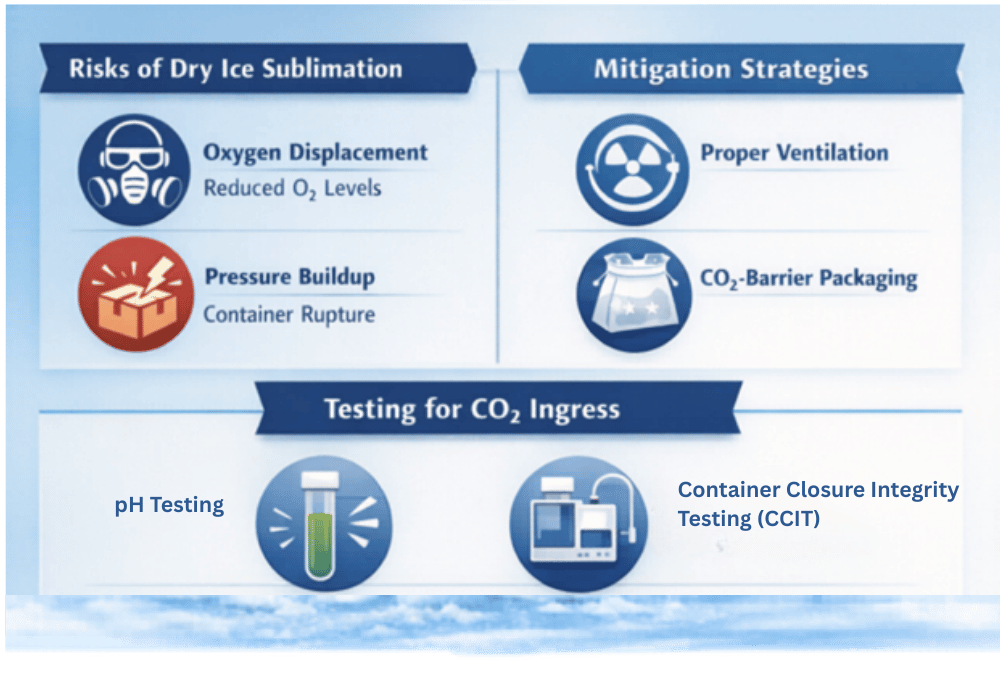
- Oxygen Displacement: Elevated CO2 levels can significantly reduce ambient oxygen concentrations, posing asphyxiation risks to handlers, drivers, and warehouse personnel, particularly in confined spaces or at lower elevations where the denser CO2 tends to accumulate.
- Pressure Buildup: If shipping containers are not adequately vented, the accumulating CO2 gas can generate substantial internal pressure, potentially causing container damage or rupture, compromising both product and safety.
Mitigation Strategies for CO2 Ingress in Shipping
Effective mitigation of CO2 ingress during shipping is critical for safety and regulatory compliance. Key strategies include:
- Ventilation Practices: All areas where dry ice is stored, handled, or transported must be well-ventilated. This includes staging areas, loading docks, and especially transport vehicles. Implement forced ventilation systems or ensure natural airflow is sufficient to prevent CO2 accumulation. For sealed cargo containers, ensure appropriate venting mechanisms are utilized.
- Specialized Packaging/Barrier Bags: Use packaging specifically designed for dry ice transport. This packaging must allow for safe venting of CO2 gas to prevent pressure buildup while maintaining thermal performance. Avoid hermetically sealed containers.
- Representative Material: For shipping qualification, representative material can be used with the proper justifications in order to minimize destruction of valuable product. A common strategy is using a mixture of representative and active material.
Testing for CO2 Ingress
Verification that product quality is maintained after shipment is typical in shipping qualification.
- pH Testing: After dry ice shippers containing product or placebos filled with buffer underwent distribution testing or actual shipment, the vials can be tested for pH to verify the product packaging is adequate in preventing CO2 ingress after exposure to dry ice during storage and transportation in the dry ice shipper.
- Container Closure Integrity Testing (CCIT): CCIT using CO2 as the tracer gas can also be performed to indicate whether the primary container’s closure is susceptible to CO2 permeation. However, CO2 permeation through the primary container itself should be considered.
What can Lean Biologix (LBX) do to help?
The LBX team has extensive experience with selecting and qualifying shippers for maintaining ultra cold temperatures (< -60℃, < -65℃, < -130℃, etc.). LBX can develop, evaluate, and execute shipping qualifications for a customer’s review while being compliant with the current industry and regulatory standards. LBX has helped design packaging to minimize the risk from CO2 ingress and successfully qualify the packaging with the shipping systems for product protection from physical damage and challenging thermal environments during distribution. For more information on shipping qualification, see Design Qualification (DQ), Operational Qualification (OQ), and Performance Qualification (PQ).